Whitby to Robin Hood's Bay
Walk a stunning section of the Cleveland Way from Whitby to Robin Hood's Bay, with dramatic clifftop views over the North Sea and a rich mix of coastal wildlife and history.
 Length: 7 miles
 Duration: 4 hours
 Difficulty: Intermediate
From £35 per person
Explore Yorkshire's finest walks with Hike Yorkshire's expert guides. We handle the navigation, pacing and safety, so you can focus on the landscape, the history and the day itself.
 Ex-military guidesEducational hikesHistorical and folklore commentary throughoutSmall groups
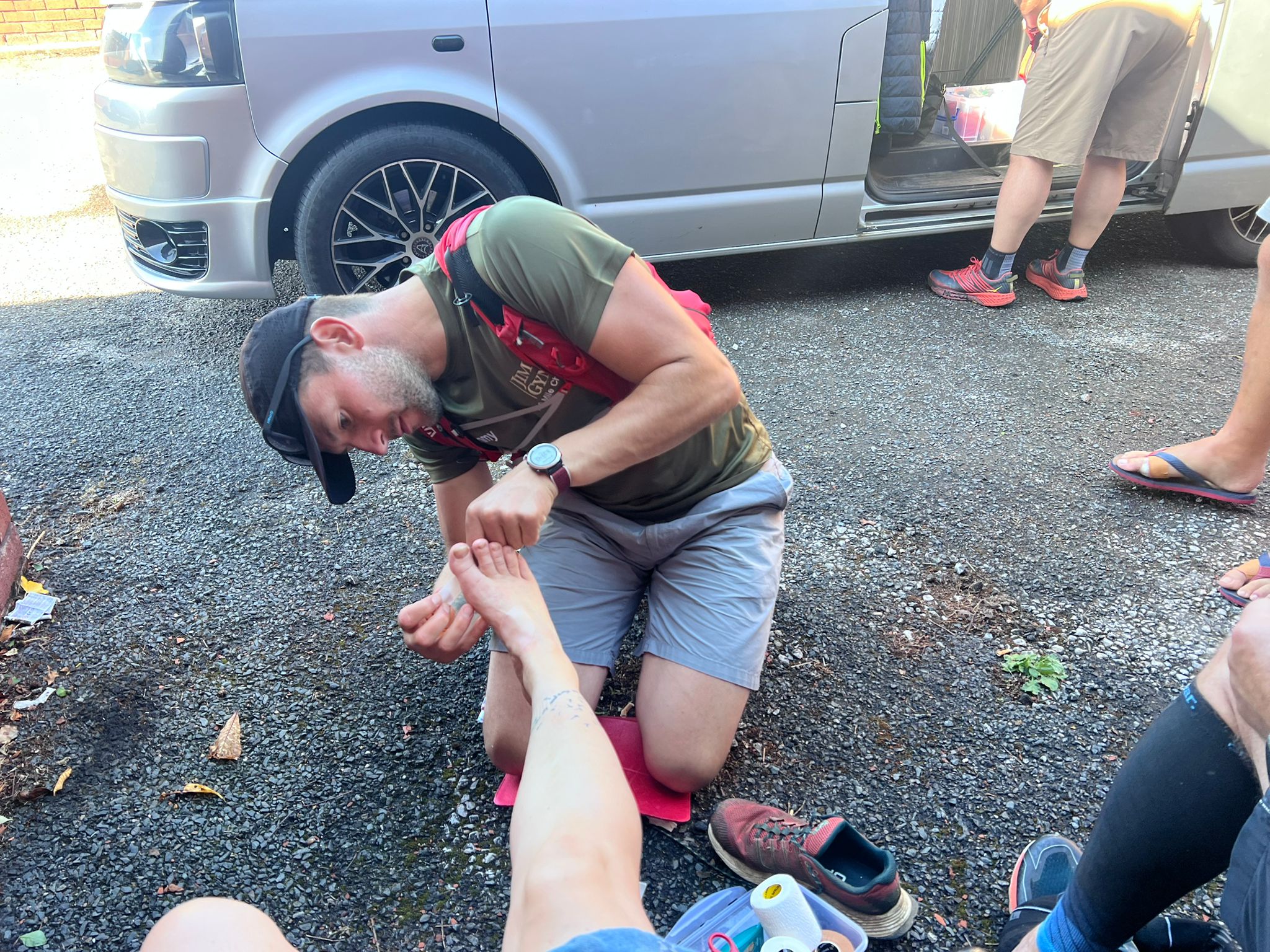
Do you need a guide?
Hike Yorkshire provides ex-military guides who are highly trained in navigation, first aid, fieldcraft, and fitness. Their local knowledge is invaluable in ensuring your day out is both educational and enjoyable.
Conditions on the hills can change quickly, so taking a well-drilled professional along is the best way to make sure everyone returns safe and happy.
Seven Miles, Fourteen Centuries
Follow the Cleveland Way south from Whitby to Robin Hood's Bay, one of the finest stretches of coastal walking in England. You start beneath the ruins of Whitby Abbey, walk clifftops formed from rocks laid down when dinosaurs were alive, pass the rusting wreck of a trawler that ran aground on a calm night nobody has ever explained, and finish in the steep, cobbled village that was once one of the busiest smuggling ports on the North East coast.
Your guide brings all of it to life as you walk: the saints, the Vikings, Dracula, the smugglers and the rocks themselves.
The Route
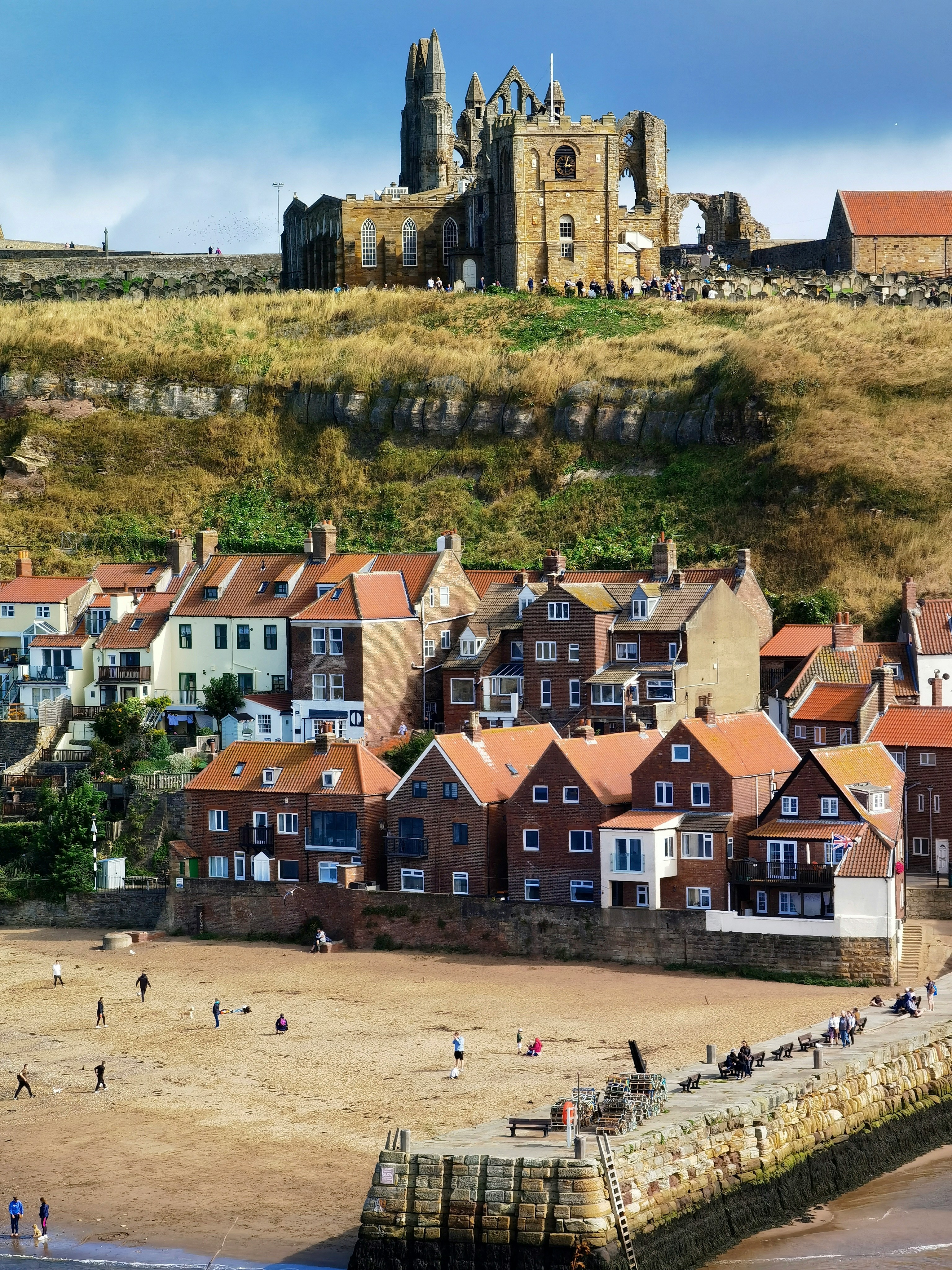
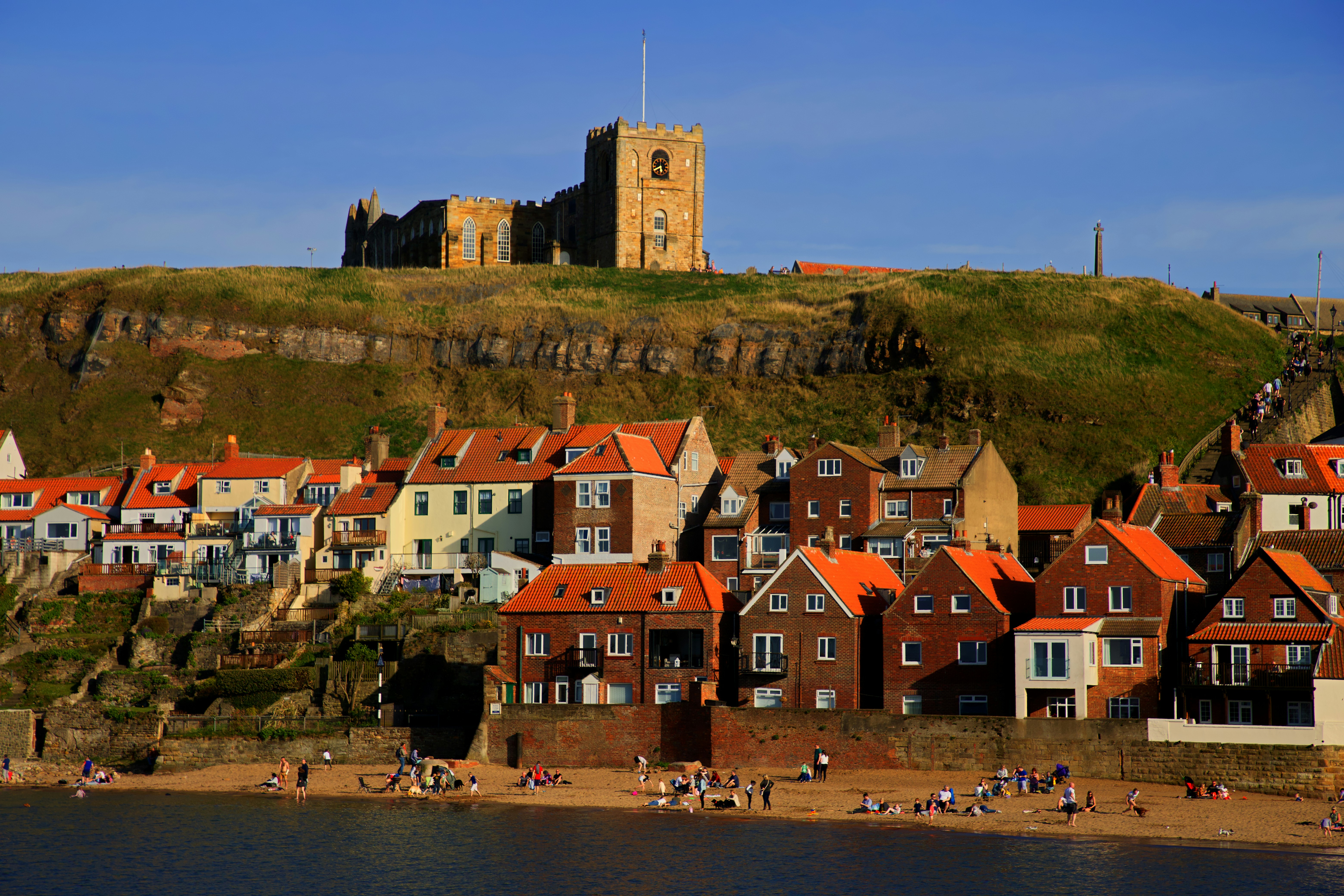
We start in Whitby and climb the 199 steps to St Mary's Church and the Abbey on the East Cliff. From the headland the Cleveland Way runs south along the clifftops, past Saltwick Bay and Black Nab, then on along open cliffs with the North Sea below. The final stretch rounds Ness Point and drops down into Robin Hood's Bay.
The path is well defined, with a few short climbs and descents and some steps. It suits anyone with reasonable fitness who is comfortable walking for four hours with stops.
Finish with a drink or an ice cream by the slipway, then take the regular bus back to Whitby.
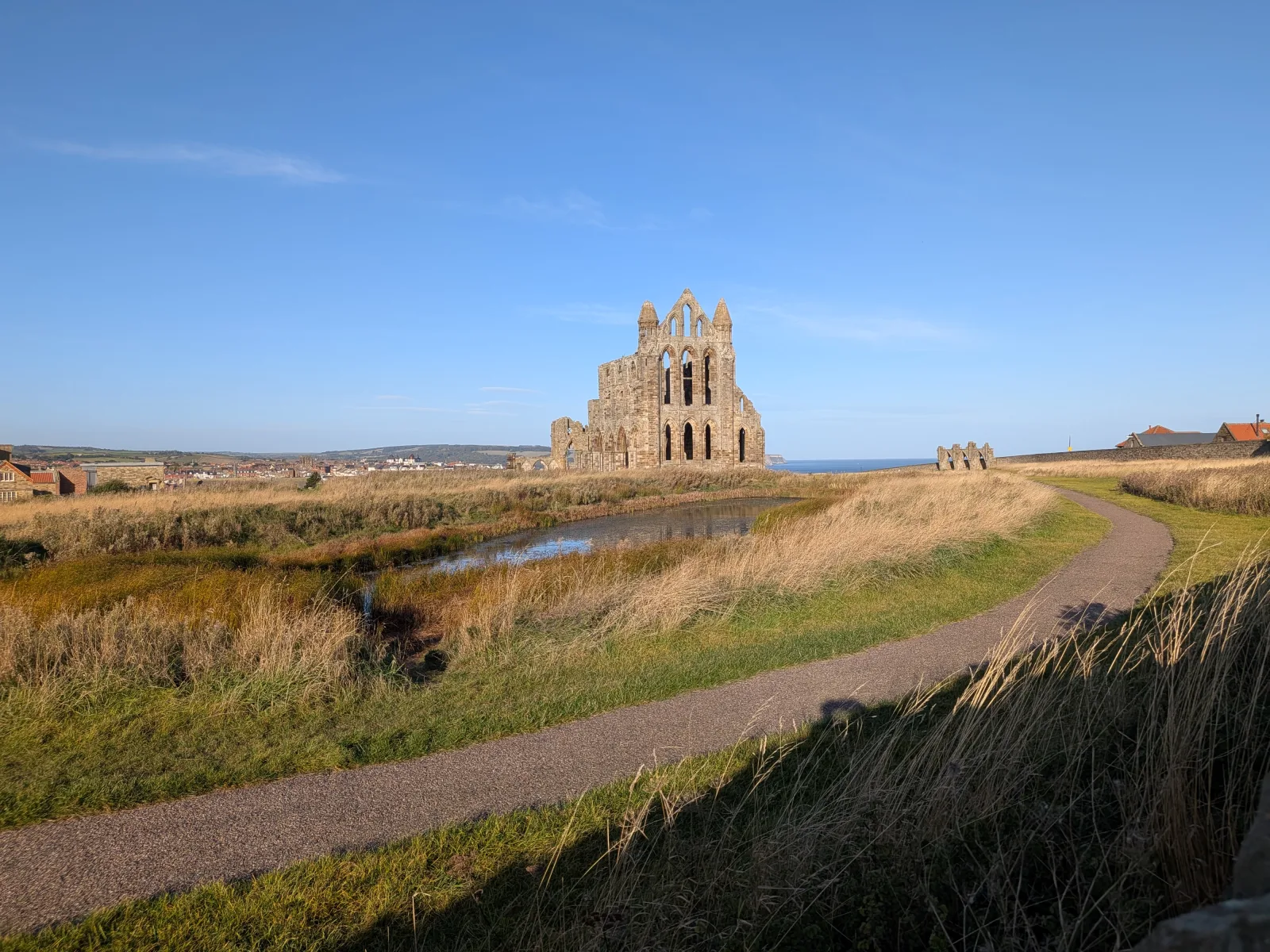
Whitby Abbey: Saints, Synods and Shellfire
Around 657, the abbess Hild founded a monastery on the headland, with the support of King Oswiu of Northumbria. It became one of the most important religious houses in Anglo-Saxon England.
Two things happened here that still matter. Caedmon, a cowherd at the monastery, is the first named poet in the English language. And in 664 the Synod of Whitby met here to settle a dispute between the Celtic and Roman traditions of the Church, including how to date Easter. Oswiu ruled for Rome, and English Christianity took the direction it kept for nearly nine hundred years.
The monastery was abandoned in the 9th century, probably after Viking raids and Danish settlement. Around 1078 a monk named Reinfrid refounded it as a Benedictine community, and the great Gothic church whose ruins you see today was built in the centuries that followed. It was suppressed in 1539 under Henry VIII and passed to the Cholmley family.
In December 1914 the German fleet shelled Whitby, and shells struck the ruins, damaging the west front.
Dracula's Whitby
In the summer of 1890, Bram Stoker came to Whitby on holiday and stayed at 6 Royal Crescent. On 8 August he visited the town library and found a book describing a 15th century prince, Vlad Tepes, known as Dracula. He noted the name.
A few years earlier, a Russian ship called the Dmitry had run aground below the East Cliff. In the novel it becomes the Demeter, which drives ashore with its captain dead and lashed to the wheel, while a great dog leaps from the wreck and runs up the steps to the churchyard.
Stoker walked that churchyard copying names from the headstones. One of them, Swales, became the name of Dracula's first victim in Whitby. We walk past the same graves on the way to the Abbey.
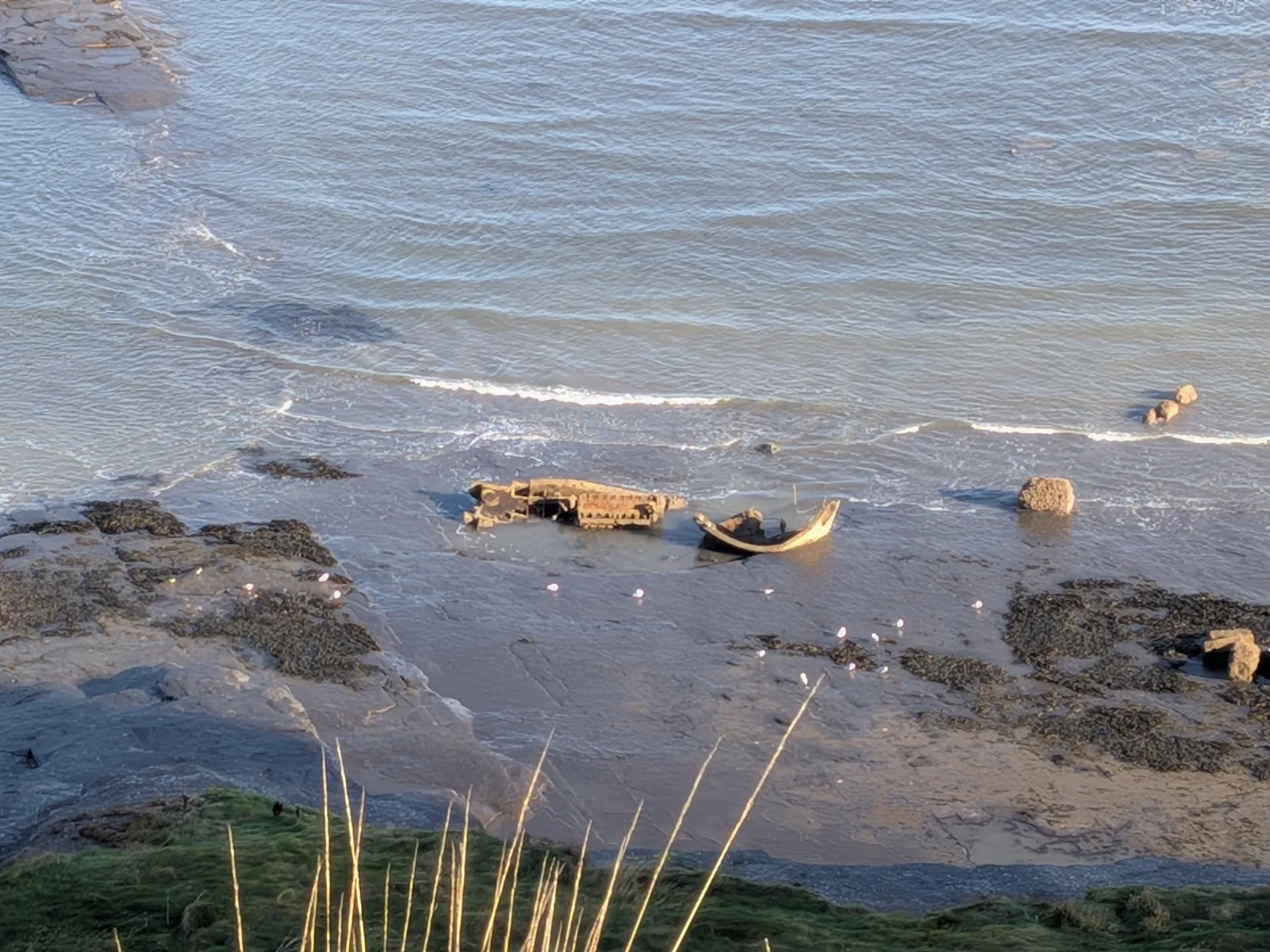
The Wreck at Saltwick Bay
On the night of 30 September 1976, the Scarborough trawler Admiral Von Tromp set out for fishing grounds far out in the North Sea. It never arrived. Instead it ran aground at Black Nab, near Whitby, heading in almost the opposite direction to its course.
The sea was calm and nothing was found wrong with the boat. Two of the five crew drowned, including the man at the helm. Nobody has ever established why the trawler turned towards the shore.
Its twisted, rusting remains are still visible at low tide in Saltwick Bay, just below the path.
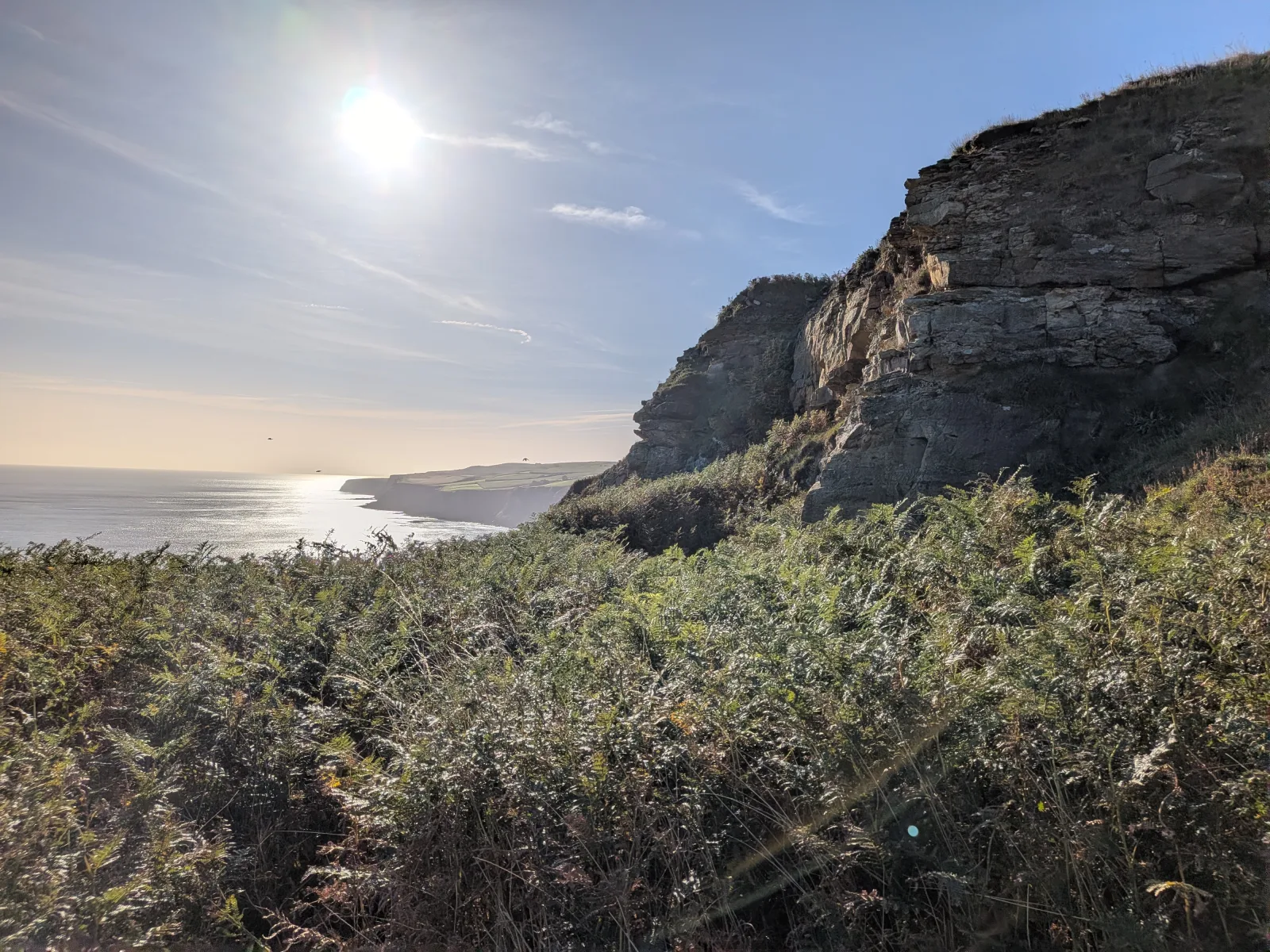
Rocks From the Age of the Dinosaurs
The cliffs along this coast are Jurassic, laid down as mud and sand on the floor of a shallow sea roughly 180 to 195 million years ago. That is why this is one of the best places in Britain to find ammonites.
Whitby jet comes from these rocks too. It is fossilised wood from trees related to the monkey puzzle, buried in the seabed mud and slowly compressed. Queen Victoria wore it in mourning for Prince Albert, and Whitby's jet workshops became world famous.
Local legend says St Hild turned the snakes plaguing her abbey to stone and threw them off the cliff, which is why fishermen called ammonites snakestones. One ammonite genus is named Hildoceras in her honour, and three coiled ammonites appear on Whitby's coat of arms.
At Robin Hood's Bay the rocks have been pushed up into a dome and planed flat by the sea. At low tide you can see the result: a vast wave-cut platform of rock ledges, or scars, sweeping out across the bay.
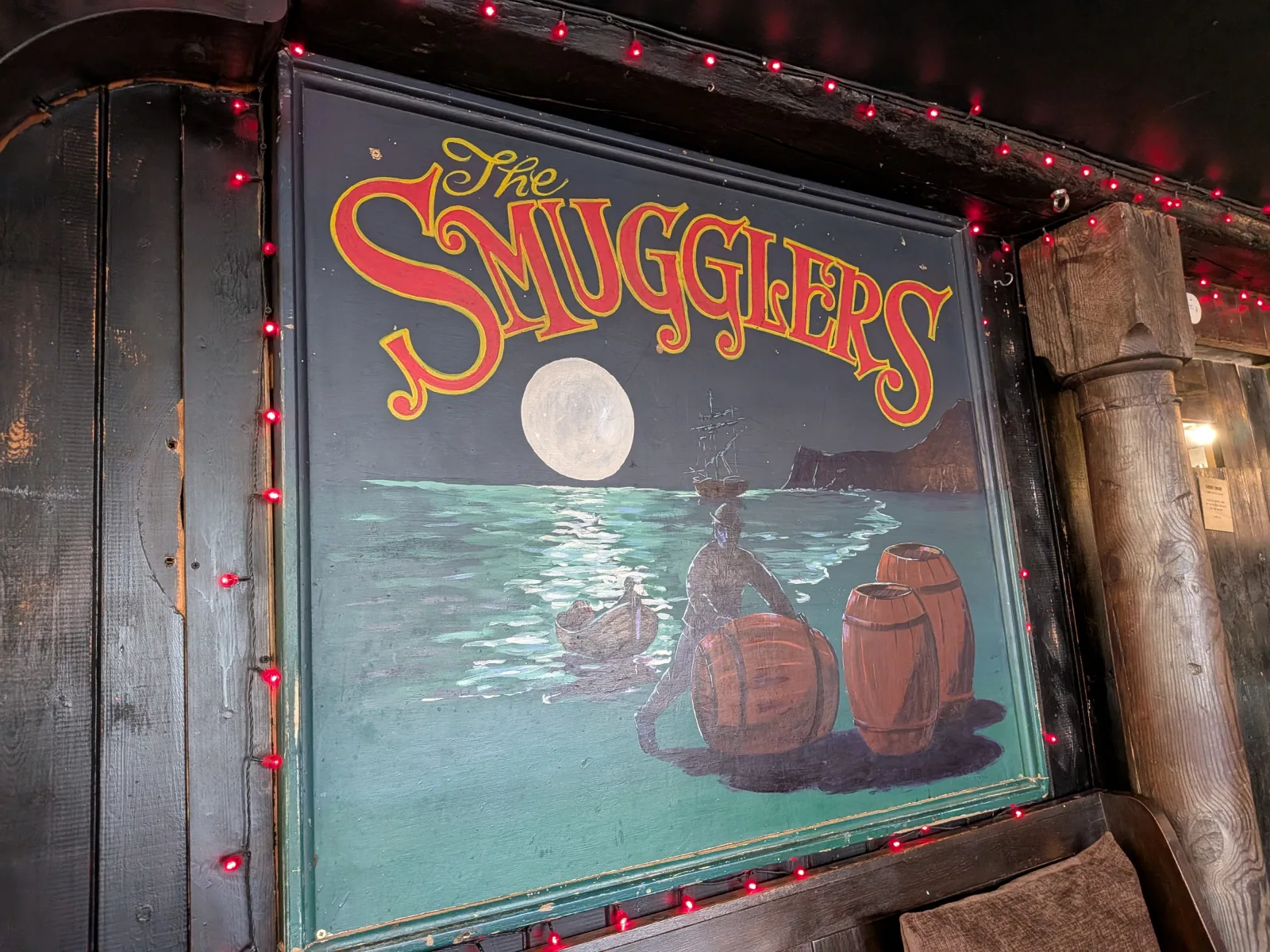
The Smugglers of Robin Hood's Bay
In the 18th century, Robin Hood's Bay was one of the most important smuggling villages on the North East coast. Heavy duties on tea, silk, tobacco, brandy and gin made it worth the risk, and much of the village was involved, from fishermen to innkeepers.
The houses are packed so tightly into the ravine that, according to local tradition, goods could be passed from cellar to cellar and house to house without ever going outside. People said a bale of silk could travel from the shore to the top of the village without seeing daylight.
One local story tells of revenue men in 1779 who seized a cargo of gin and brandy, guarded it at the Fisherman's Arms, sampled it, fell asleep, and woke to find the smugglers had taken it all back.
The sea has taken its own share of the village too. Streets and houses have fallen into the bay over the centuries, and the sea wall that protects it today was only built in 1975.
From the Trail
Sights of Interest
- Whitby Abbey: Anglo-Saxon and Gothic ruins on the East Cliff, site of the Synod of Whitby
- St Mary's Church and the 199 Steps: the churchyard that inspired Bram Stoker
- Saltwick Bay: the wreck of the Admiral Von Tromp, visible at low tide
- The Cleveland Way: clifftop path with views along the coast
- Robin Hood's Bay: smugglers' village with a vast wave-cut platform below it
Why Choose Whitby to Robin Hood's Bay?
 One of Yorkshire's most spectacular coastal walks with breathtaking clifftop views over the North Sea
 A route steeped in maritime heritage, from Dracula's Whitby Abbey to smugglers' Robin Hood's Bay
 Abundant coastal wildlife including seals, seabirds, and wildflowers along the rugged coastline
What People Say About Hike Yorkshire
We thoroughly enjoyed our hike between Whitby and Robin Hood’s Bay with Ryan. He made organising the walk very easy with his prompt, informative communications, and we got started right on time. Ryan’s knowledge of the countryside and its history was very comprehensive, and we ended up hiking while having a fun, in-depth discussion of English history as well as foraging, camping and language topics. The walk itself was a lovely, well-chosen track and we got lucky with the unpredictable October weather. Overall, a highly recommended experience.
Daniel Waters
Whitby to Robin Hood's Bay Walk
It was so much more than just a hike. I learned practical map-reading skills, how to take and use coordinates, and gained a real insight into the nature, history and landscape of the area. The guide was knowledgeable, friendly and made the whole experience really enjoyable, with plenty of interesting facts and stories along the way. A brilliant mix of adventure, learning and enjoying the outdoors.
Julie W
Ilkley Moor Walk
Ryan and his team made us feel very looked after during our day with Hike Yorkshire. I gained a lot of knowledge in navigation during the day and the guys were sharing valuable knowledge throughout the walk. Would definitely recommend!
Joe M
Ilkley Moor Walk
Absolutely top class day out on the hills led by expert guides. Great knowledge of the area helping us hone our winter skills.
James A
Guided Hill Walk
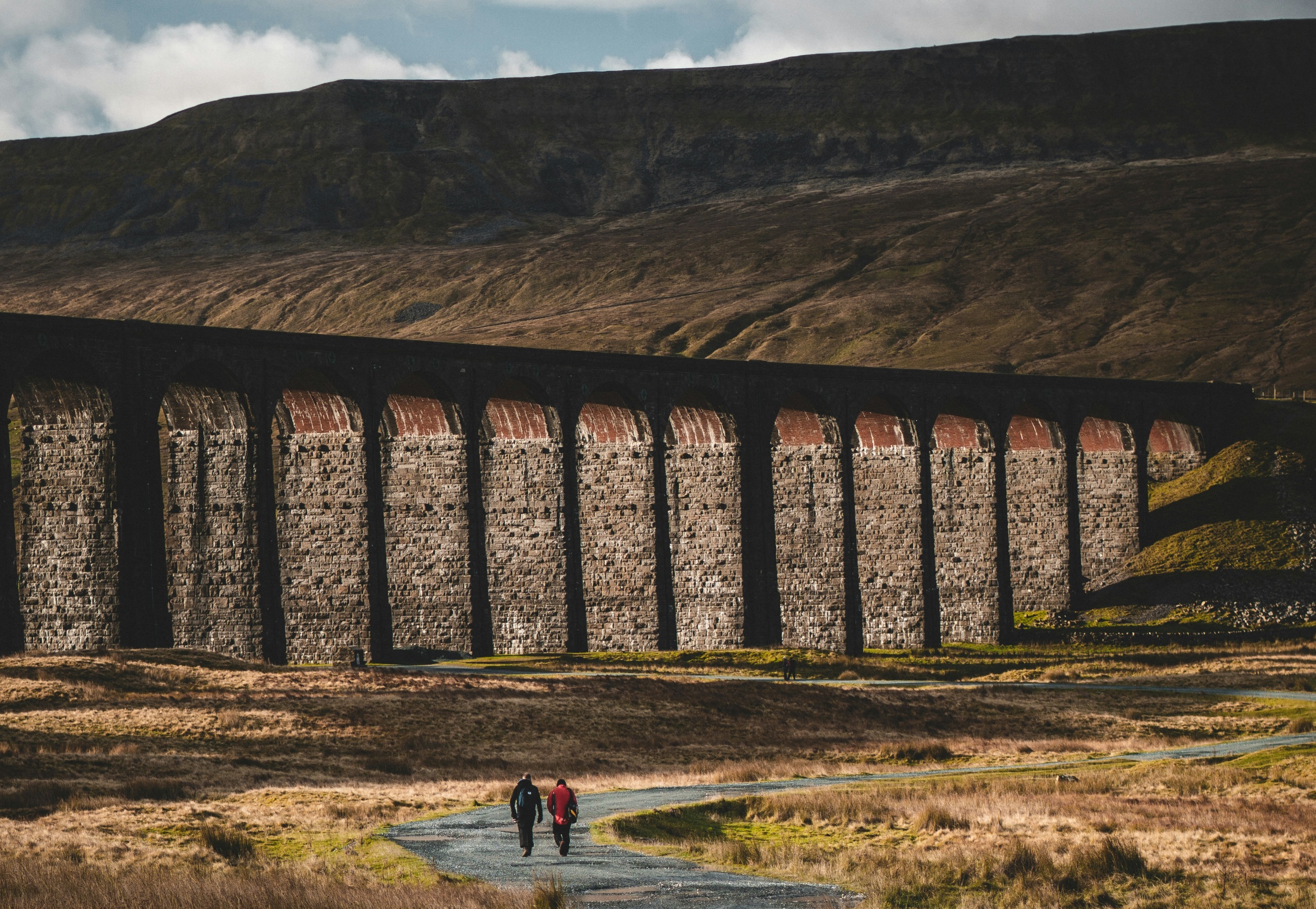
Yorkshire 3 Peaks
Conquer Yorkshire's iconic 3 Peaks in a legendary 25-mile endurance challenge
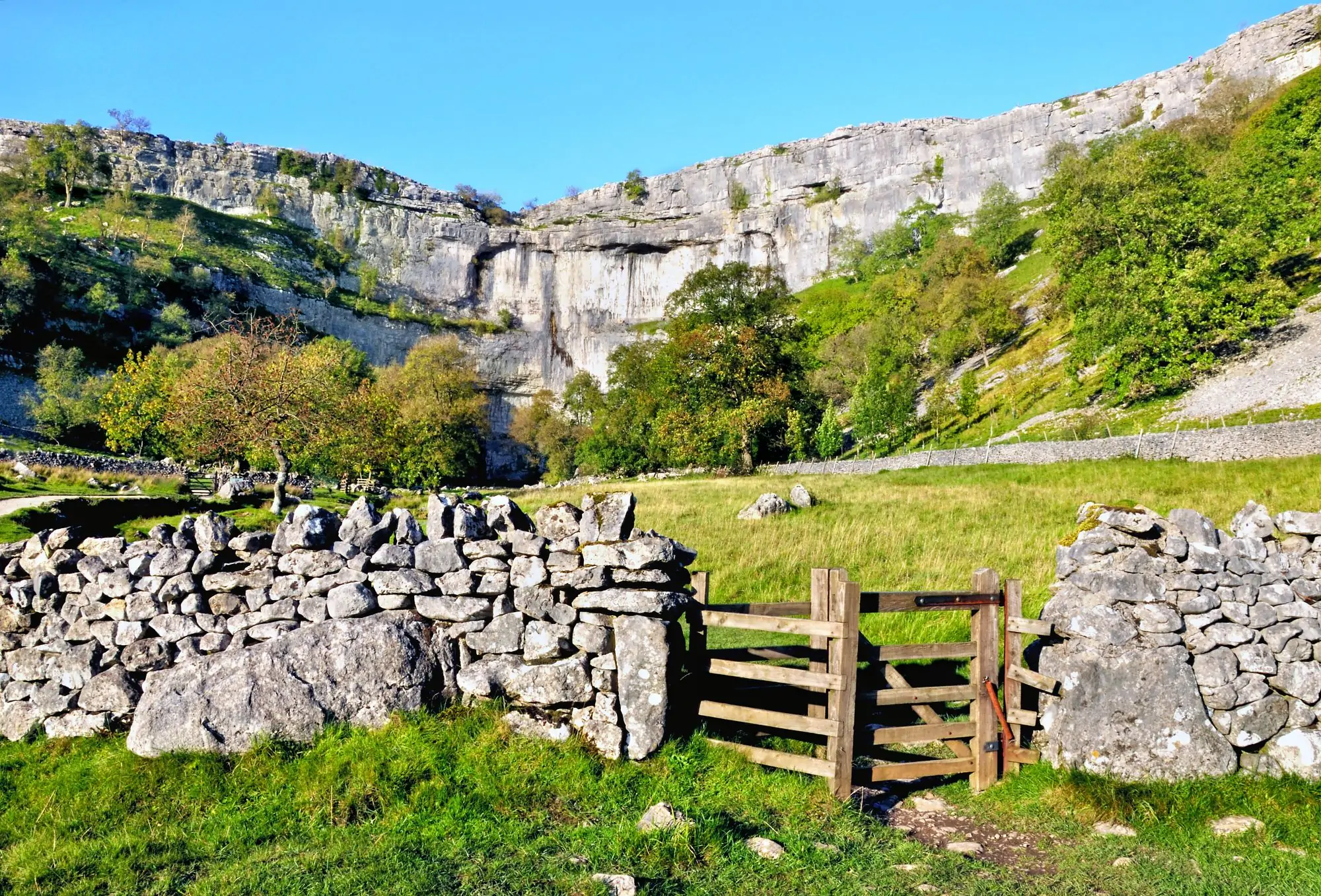
Malham Cove and Janet's Foss
Explore limestone cliffs, woodlands, and one of Yorkshire's most loved waterfalls
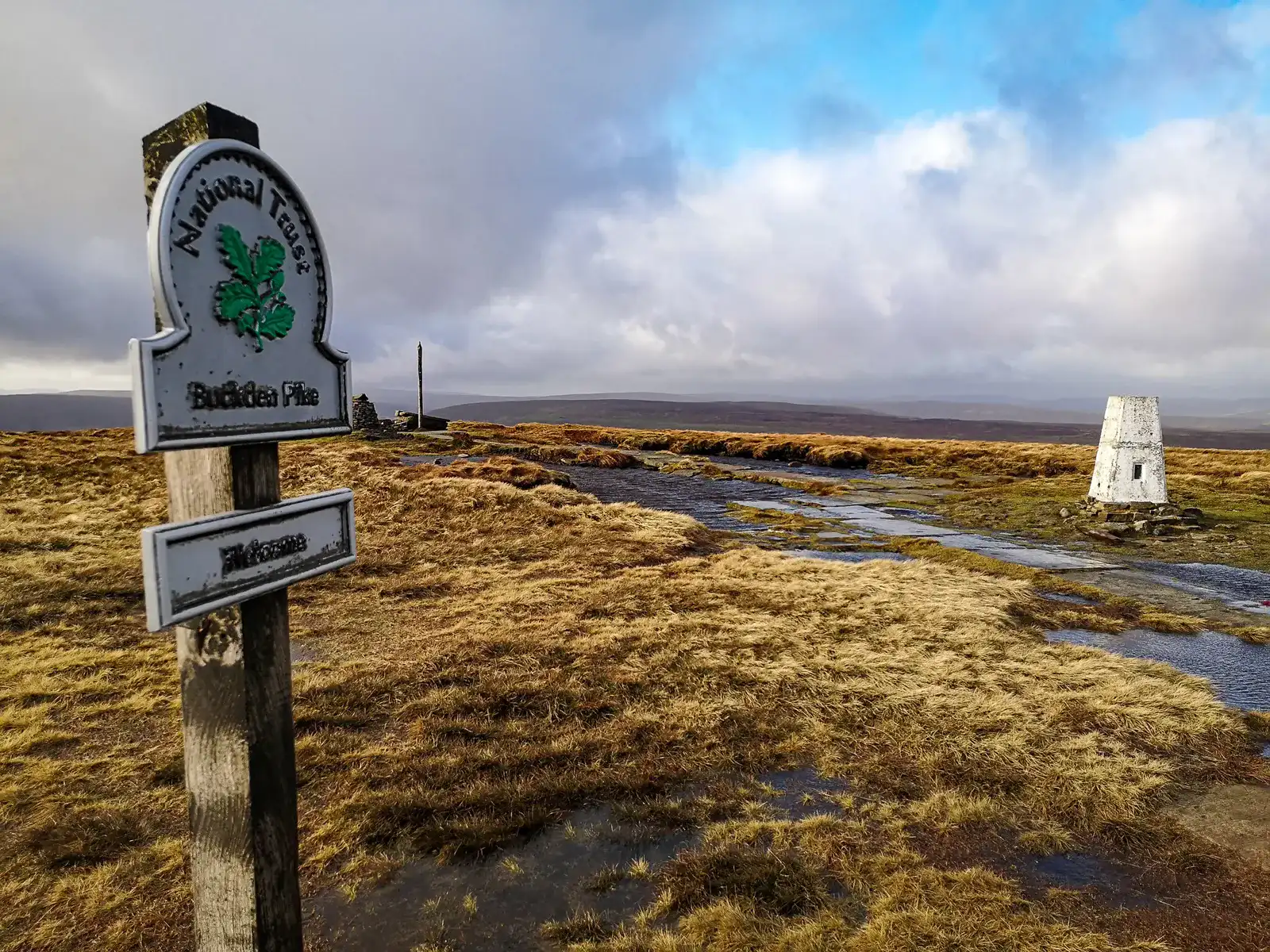
Buckden Pike
Climb one of the Dales' most distinctive peaks with panoramic views over Upper Wharfedale

Ilkley Moor and the 12 Apostles
Wander across heather moors and visit the ancient stone circle high above Ilkley